
US, UK & EU sizing: how to measure shoes and clothes
Compare shoe and clothing measurements when listings use US, UK or EU size labels. This guide explains what to measure and how to read the selected seller’s chart; it does not provide a universal size conversion.
Match the exact listing’s measurement method to an item that already fits. Compare measurements before comparing size labels. A flat chest width is not a chest circumference, and a foot length is not the same measurement as an insole length. There is no single reliable conversion table for every seller.
Quick checklist
- Measure a similar item that already fits.
- Confirm centimetres, inches and measurement points.
- Use the chart for the exact option.
- Request a warehouse measurement when needed.
Which measurements should I compare?
Measure a garment or pair of shoes you actually wear. Match the measuring method to the seller’s chart: a flat garment width is different from a body circumference. Record the fit you want, such as close, relaxed or roomy enough for another layer.
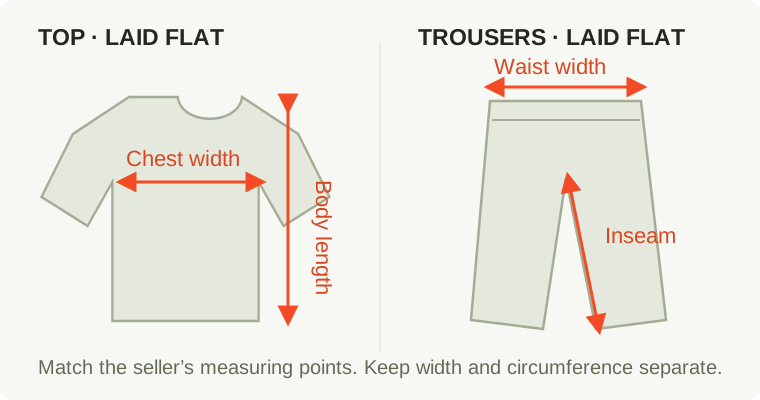
| Product | Record these measurements | Keep the method consistent |
|---|---|---|
| Tops | Flat chest width, shoulders, body length, sleeves | Lay the garment flat; do not stretch it. |
| Trousers and shorts | Waist, rise, thigh, inseam, leg opening | Record relaxed and stretched waist separately if elasticated. |
| Winter jackets | Chest, shoulders, sleeves and length | Compare with a jacket worn over similar layers. |
| Shoes | Foot length and width; requested insole measurement | Keep foot, insole and outsole figures separate. |
Scroll horizontally to view all columns.
How do I compare US, UK and EU shoe sizes?
Check the stated sizing system and compare the relevant foot or insole measurement. Ask which measurement a centimetre figure describes. Width, toe shape and lining also affect fit; an EU label or a photo of a size tag alone cannot settle those questions. Browse the sneakers category when you are ready to compare listings.
Foot length versus insole length
A 26.5 cm foot and a 27.5 cm insole are different measurements. Do not select an option by matching those numbers as if they described the same thing. Measure both feet while standing, use the longer foot for the chart, and check which foot-length range the seller assigns to the selected option. Width and toe shape still matter.
Worked example: choosing between two garment sizes
Compare chest width, shoulder width, sleeve length and total length together. A shorter body or dropped shoulder changes the silhouette even when chest width looks suitable. Measure a winter jacket over the layers you expect to wear underneath.
| Measurement | Your reference | Listing M | Listing L |
|---|---|---|---|
| Flat chest width | 55 | 53 | 56 |
| Body length | 70 | 68 | 70 |
| Shoulders | 48 | 47 | 49 |
| Sleeve length | 62 | 61 | 63 |
Scroll horizontally to view all columns.
Read the fit difference
For a slightly roomier top with the same body length, L is the closer starting point in this example. Compare all four measurements and the seller’s tolerance before choosing. A label such as L does not establish that another product will have these dimensions.
Read trouser measurements as a set
Check waist, rise, thigh width, inseam and leg opening. For elasticated shorts, distinguish relaxed and stretched waist measurements. Confirm whether the waist chart describes a flat width or the complete circumference before comparing the numbers. Use these measurements when comparing listings in the jeans category.
Flat width and unit conversion
A garment measured 55 cm straight across the chest is approximately 110 cm around only when the front and back widths are equivalent. It is still a garment measurement, not a recommended body size. Use inches = centimetres ÷ 2.54: 55 cm is about 21.65 inches; 110 cm is about 43.31 inches.
What should I ask the warehouse to measure?
State the item reference, selected size, measurement and the points between which the ruler should run. Ask for the garment to be laid flat without unnecessary stretching. If the measurement differs materially from the listing, resolve it before approving dispatch.
Allow for small differences in measurements
Ask about the seller’s stated measurement tolerance and the material’s stretch. A small numerical difference can matter more on a fitted item than on a relaxed layer. Do not automatically size up or down across every product in your haul.
Common questions
Can I use one US-to-EU shoe size table for every listing?
Use the listing’s chart and the actual measurements you need. Brand, shape and seller differences can make a general table insufficient.
Does a QC size label prove the item will fit?
No. It confirms a visible label; measurements and the item’s cut are still relevant.
Should I always size up when buying through a spreadsheet?
No. Use the exact product’s measurements, desired fit and material. A universal size-up rule can make the next product fit worse.
What if the warehouse measurement differs from the chart?
Compare measuring points first. If the difference remains significant for your fit, request clarification or review return eligibility before dispatch.
Ready to browse products?
Choose a category to explore products and compare the details.
Explore categories